



Ministry of Information & Broadcasting
Theatre roots and in-depth character study shaped Jamil Jamali in ‘Dhurandhar’, reveals Rakesh Bedi at IFFI 57
Goa, 21 November 2026
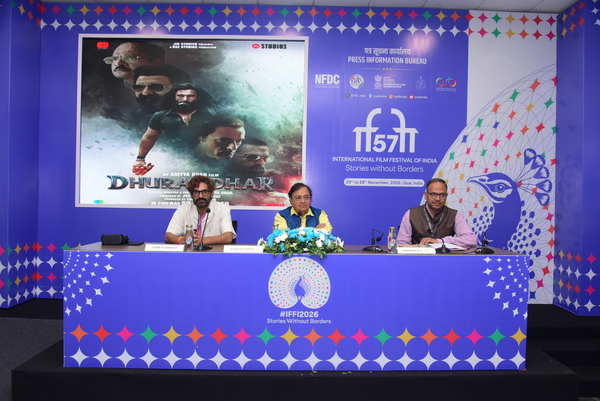
Aditya Dhar’s Hindi feature film Dhurandhar, which opened the Mainstream Cinema Feature Film category of the Indian Panorama section at the 57th International Film Festival of India (IFFI), was the focus of an engaging press conference held on the second day of the festival at the festival’s Media Centre in Panaji, Goa.
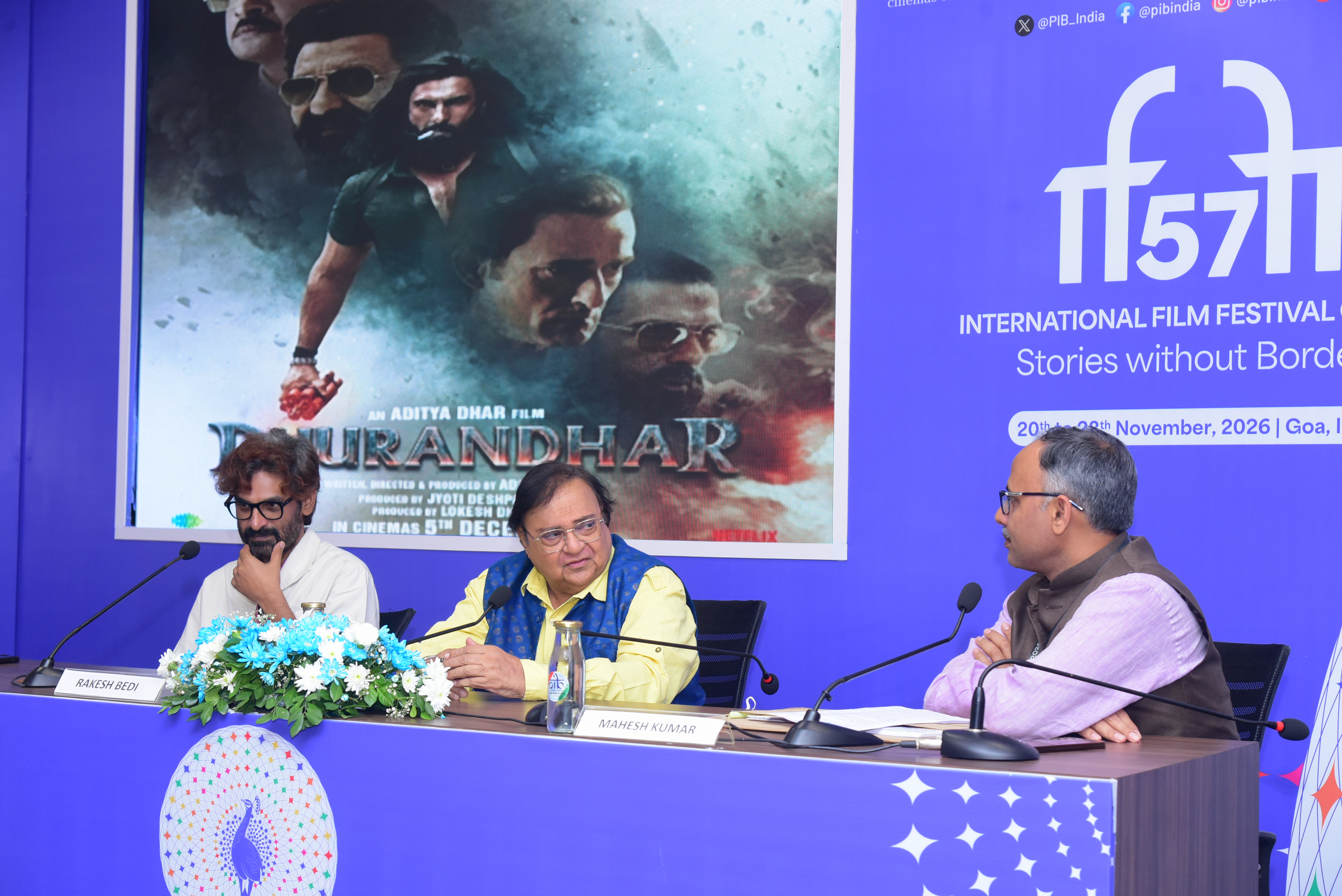
The interactive session featured veteran actor Rakesh Bedi and acclaimed production designer Saini S. Johray, who shared insights into the film’s creative journey, nuanced characterisation and visual world-building. The session was moderated by Shri Mahesh Kumar, Additional Director General, Ministry of Information & Broadcasting.
Speaking about his portrayal of Jamil Jamali, Rakesh Bedi highlighted the importance of layered character writing in contemporary cinema. Drawing on his extensive theatre experience, which he described as an enduring foundation of his craft, Bedi spoke about the meticulous research that went into developing his character. He emphasised that a character’s actions must be driven by the demands of the scene, making the performance a complete character portrayal rather than an exercise in mere mimicry.
Reflecting on his five-decade-long career, marked by diverse and challenging roles, Bedi spoke about the changing reach and visibility of cinema. Recalling the immense popularity of earlier films such as ‘Ek Duuje Ke Liye’, ‘Tirangaa’ and ‘Chashme Buddoor’, he observed that while cinema enjoyed tremendous public appeal even then, its reach was limited by the absence of digital connectivity.
In contrast, social media has transformed how audiences discover and engage with performances, allowing an actor’s work to reach audiences across the world with a single click.
Responding to a question from a film enthusiast about his comic and dramatic timing, Bedi explained that such nuances are never accidental. Every gesture and expression, he said, is carefully planned as part of the script and character arc, serving as a deliberate means of expression to bring authenticity to the portrayal.
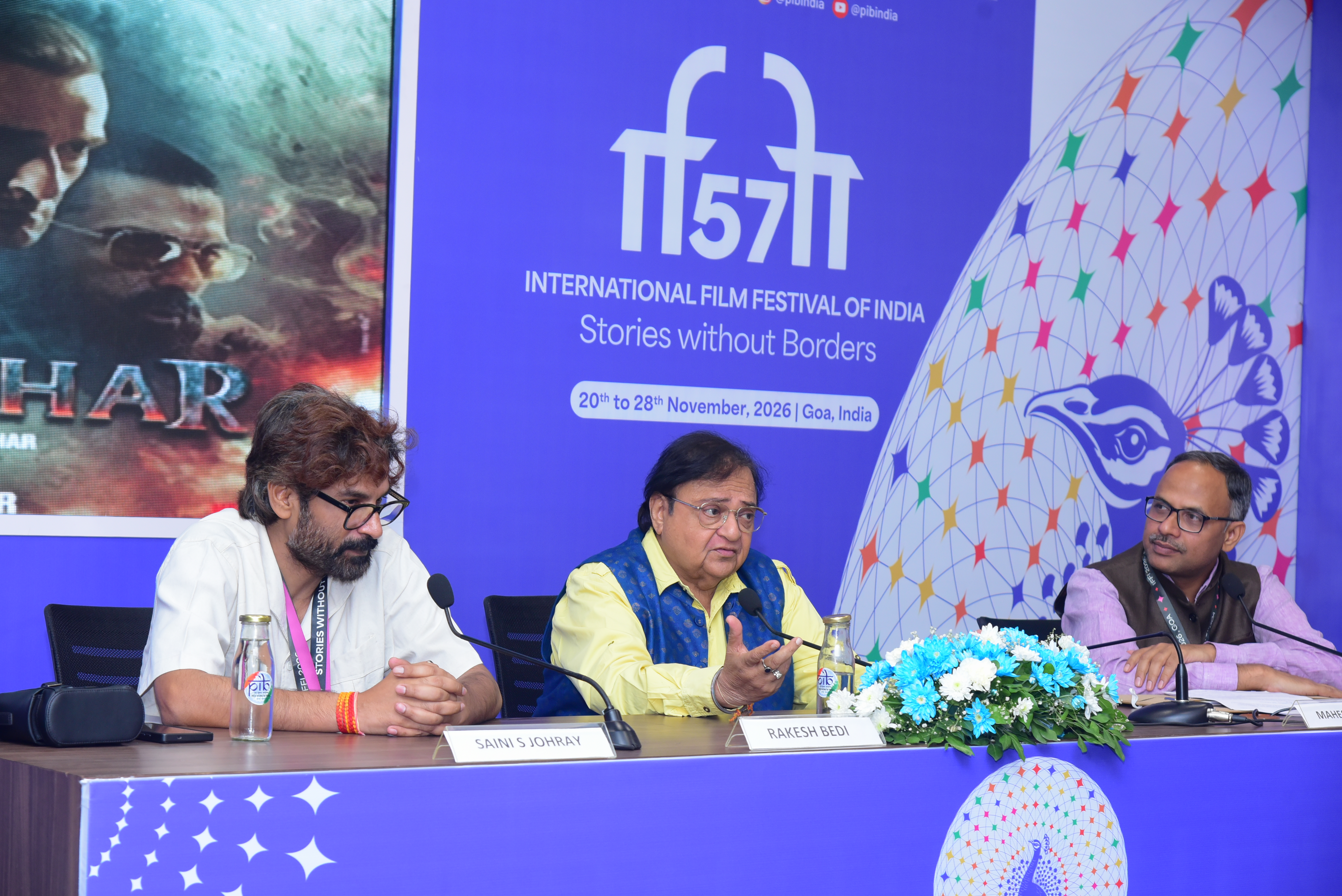
On being asked how he switches between emotions so effortlessly and whether he rehearses in front of a mirror, Bedi offered insights into his approach to acting. He advised against practising in front of a mirror, explaining that watching oneself while performing can stunt an actor’s growth, as it is difficult to objectively assess one’s performance while executing it. Instead, he emphasised the importance of deeply understanding and internalising a character. Once an actor understands the character’s psyche – speech, reactions and emotional transitions flow naturally.
Production designer Saini S. Johray detailed the architectural authenticity of the film, revealing that the team constructed over 40 practical sets. Without physical access to locations in Pakistan, Johray relied on exhaustive research, studying news archives, local gang-war reports, urban textures, and Google Maps, to faithfully reconstruct the film’s environment from scratch.
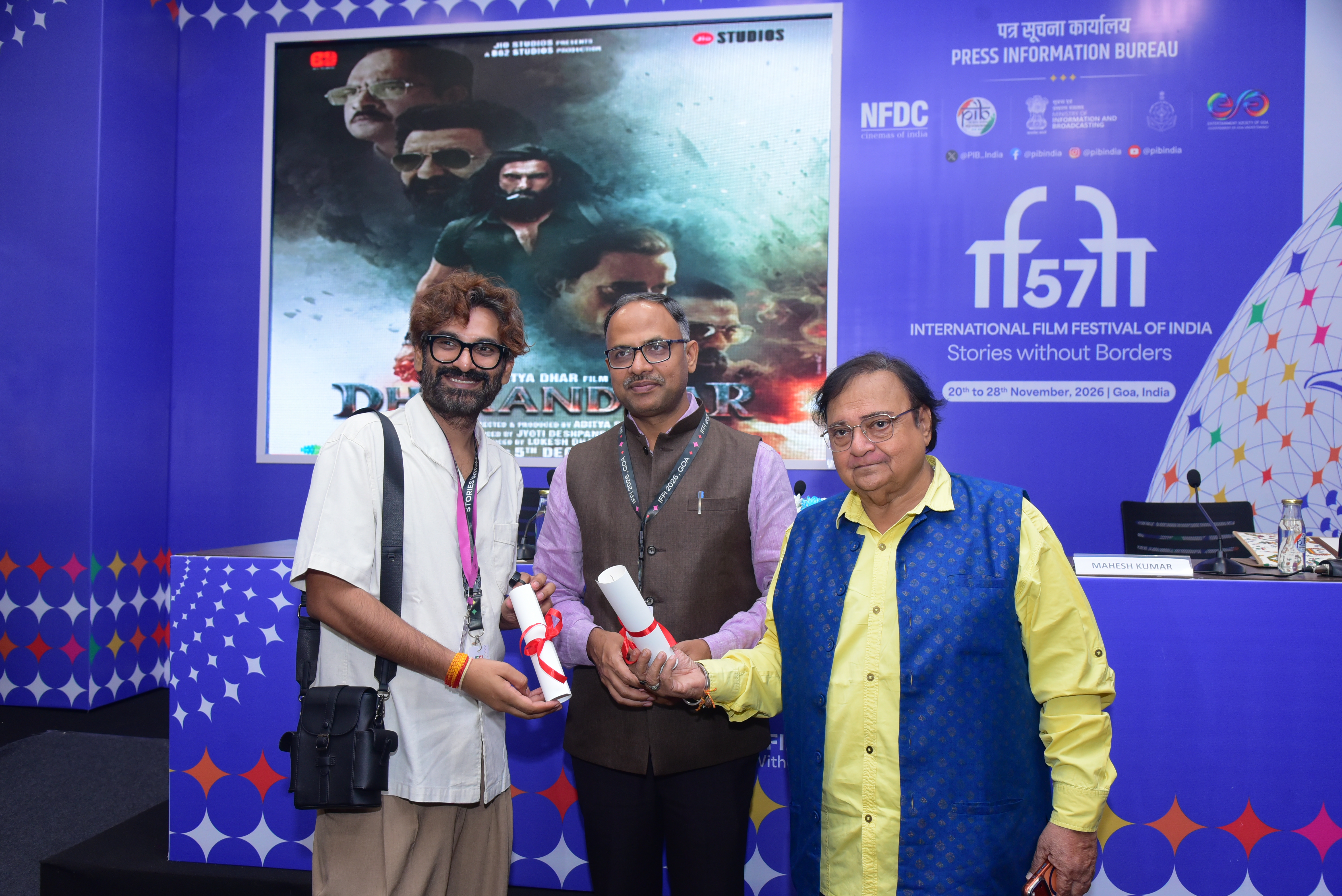
The press conference underscored the 57th IFFI’s role as a vibrant platform for meaningful conversations on cinema, bringing filmmakers, artists and audiences together to explore the creative processes behind filmmaking.
Through such interactions, the festival celebrates not only compelling stories on screen but also the craft, research and collaborative efforts that bring them to life, fostering a deeper appreciation of the diverse dimensions of cinematic expression.
Read IFFILOID here: https://www.pib.gov.in/iffi/57/iffiLoid.aspx?yr=2026&lang=1®=48
* * *
PIB IFFI Team | Rajith /Supriya /Aqib/ Darshana Rane | IFFI 57 – 057
(रिलीज़ आईडी: 2339773) आगंतुक पटल : 113