



Ministry of Information & Broadcasting
Directors Aimee Baruah and Duyu Tabyo highlight cinema’s role in preserving indigenous heritage, languages and untold stories of Northeast India
Goa, 22 November 2026
From a traditional handloom weaving community in Assam striving to preserve its cultural heritage to a grieving father’s psychological journey in the mountains of Arunachal Pradesh, two films from Northeast India bring distinct stories of identity, resilience and human emotions to the 57th International Film Festival of India (IFFI).
Red Carpet, an Assamese documentary featured in the Indian Panorama Non-Feature section while Urum is part of the Indian Panorama Feature Film category.
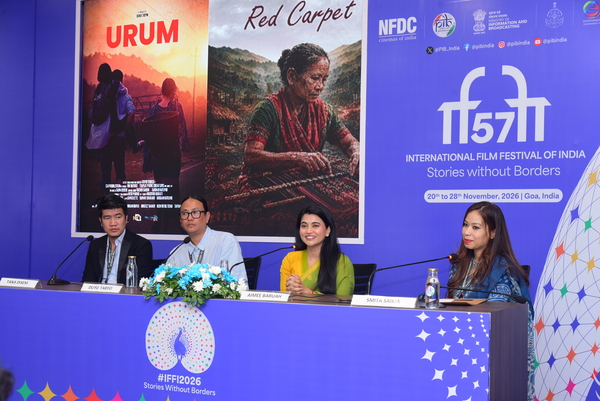
The films, Red Carpet (Assamese), directed by Aimee Baruah, and Urum, directed by Duyu Tabyo, were highlighted at a press conference held today in Goa, where the directors shared insights into their films and filmmaking journeys.
Red Carpet explores the traditional handloom weaving heritage of the Karbi community in Karbi Anglong, Assam, where a centuries-old craft faces the challenges of modernization and changing lifestyles. The documentary follows a traditional weaver’s journey from the village of Donkamokam to the red carpet of Cannes, tracing how a handmade fabric became a symbol of cultural identity, pride and hope.
Sharing her perspective on the film, director Aimee Baruah, an award-winning Indian actress, producer and filmmaker pursuing her PhD, spoke about the journey of taking a traditional handwoven fabric from a small village in Assam to the prestigious red carpet of Cannes.
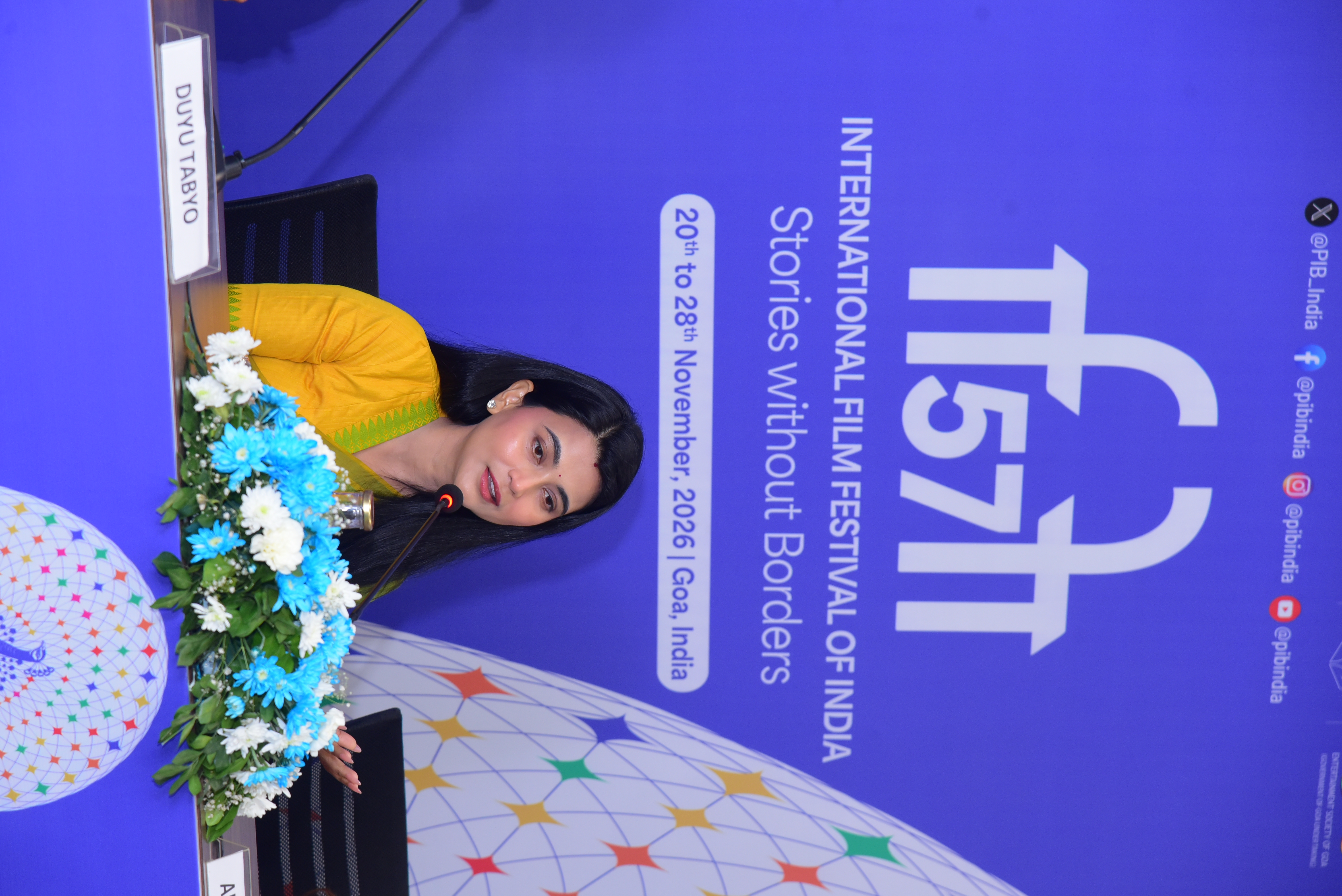
She highlighted the craftsmanship of local weavers and the cultural identity embodied in their traditional textiles, noting that the international recognition of the attire brought greater visibility to the region’s indigenous heritage.
Emphasising the need to preserve traditional weaving practices, she urged the younger generation to take pride in their language, culture and traditions and carry this heritage forward.
The second film, Urum, directed by Duyu Tabyo, explores grief, memory and indigenous beliefs through the story of a father struggling to come to terms with the tragic loss of his young daughter in a remote mountain community of Arunachal Pradesh. As he grapples with guilt and haunting visions, the film follows his search for closure amid buried truths, trauma and the unseen forces shaping the lives of his people.
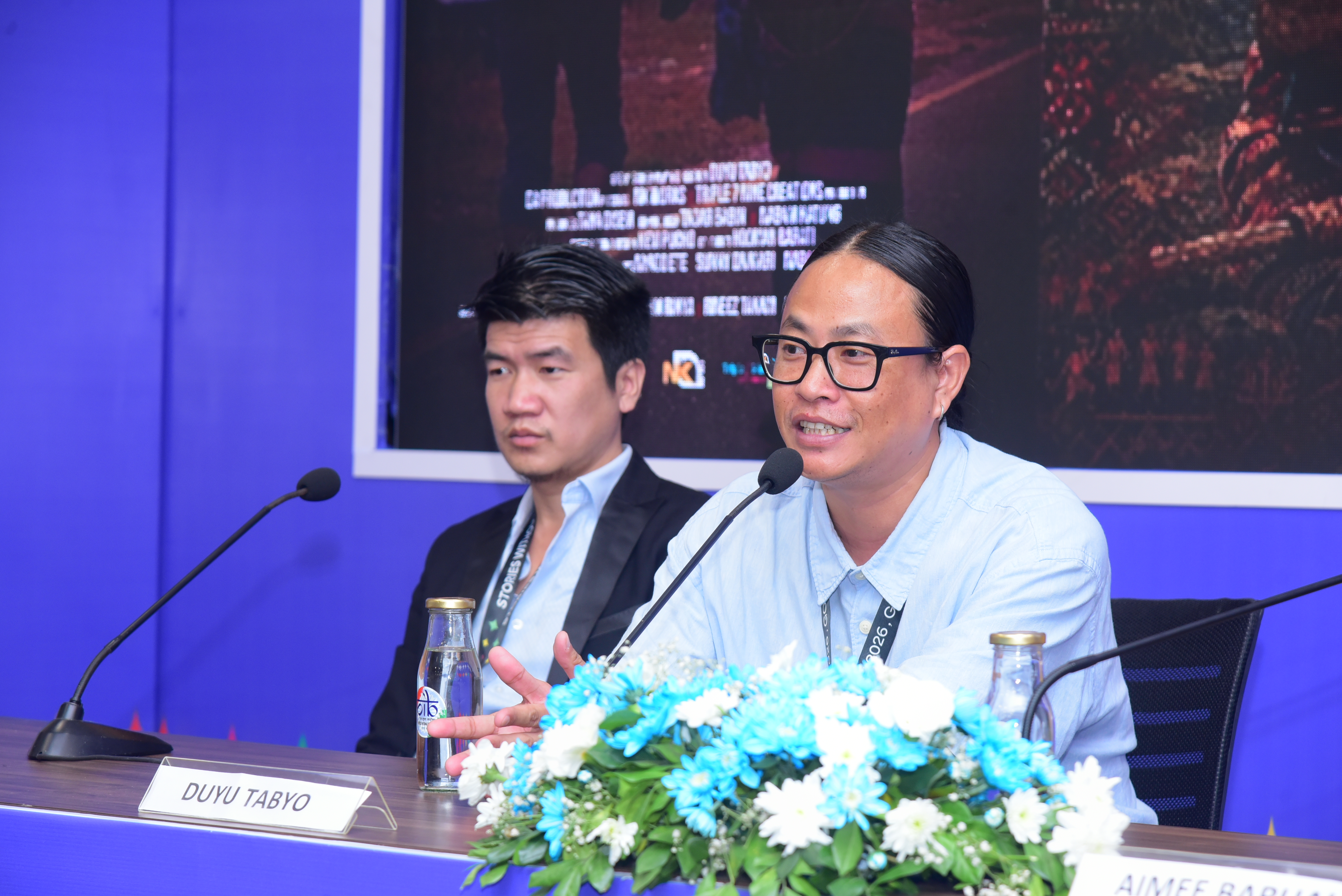
Director Duyu Tabyo, an independent writer-director and cultural practitioner from Arunachal Pradesh, whose work explores indigenous identity, memory and social realities, recalled an incident he witnessed during his childhood in Ziro, Arunachal Pradesh, involving a father struggling with the loss of his daughter. The memory stayed with him for years and eventually became the foundation of the film. He said that through the film, he sought to explore the psychological and emotional state of a grieving father rather than convey a particular moral message. Tabyo also expressed his gratitude to IFFI, describing his film’s selection at IFFI as a significant recognition for Arunachal Pradesh’s emerging film industry, expressing hope that it would encourage more young filmmakers from the state to tell their stories.
Emphasising the importance of linguistic and cultural preservation, Tabyo said that making the film in the indigenous Nishi language was a conscious decision to preserve its authenticity and bring greater visibility to the language. He noted that younger generations are increasingly losing touch with their indigenous languages and described the film as an effort to preserve the linguistic heritage of the Nishi community.
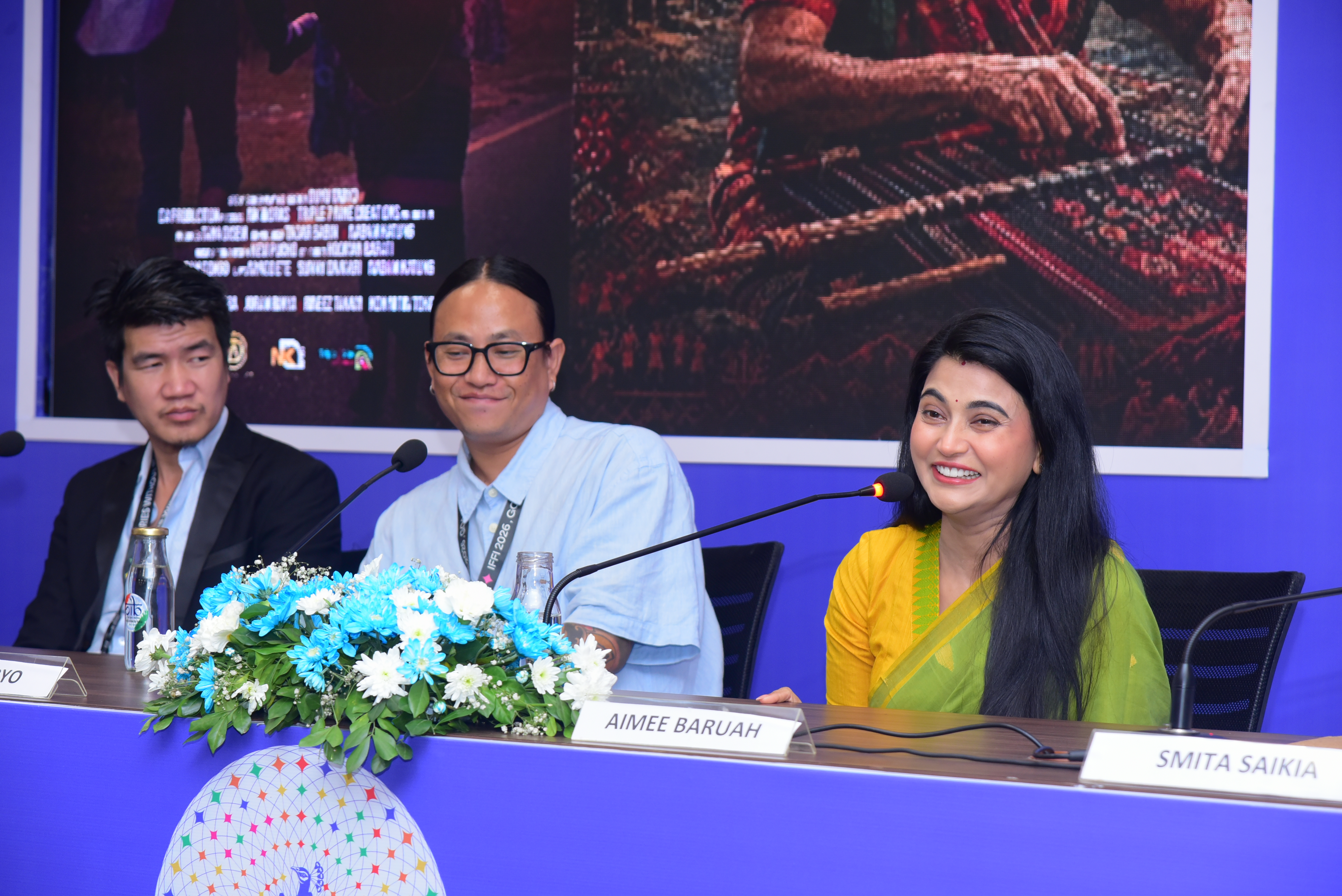
Speaking about the growing potential of cinema from Northeast India, Tabyo observed that the region remains an unexplored cinematic landscape with much to offer to the world. He noted the growing interest of mainstream filmmakers and production houses in the region, and emphasised that cinema can serve as a powerful medium for social awareness and change, beyond entertainment. He further highlighted the importance of documenting indigenous stories, languages and ways of life, saying that such efforts could help younger generations reconnect with their roots and appreciate the richness of their cultural identity.
The two films bring distinct narratives from Northeast India to the national cinematic platform, reflecting the region’s diverse cultural experiences, indigenous traditions and contemporary realities. Their inclusion at the 57th International Film Festival of India adds to the cinematic diversity that characterises this year’s festival.
The press conference was moderated by Smt Smita Saikia.
Watch the full press conference here:
Read IFFILOID here: https://www.pib.gov.in/iffi/57/iffiLoid.aspx?yr=2026&lang=1®=48
* * *
PIB IFFI Team | Rajith/ Supriya/ Andrew/ Darshana | IFFI 57 – 062
(रिलीज़ आईडी: 2339932) आगंतुक पटल : 297