


































PIB Backgrounder
India’s Changing Lighthouse Story
प्रविष्टि तिथि: 10 OCT 2026 3:00PM by PIB Delhi
For generations, India’s lighthouses were places people saw from a distance. Standing at the edge of the sea, they marked dangerous stretches of coast and guided vessels through darkness. Their lights belonged to sailors. Their towers belonged to the landscape.
With a coastline stretching over 11,000 km and 205 lighthouses, India is now reimagining these historic maritime guardians. Today, the lighthouse is becoming much more than a distant landmark. Its first purpose remains unchanged: helping vessels navigate safely along India’s coastline. Around that enduring role, however, a new chapter is taking shape. Lighthouse stations are being upgraded and opened to the public. Their maritime stories are finding space in museums, while their surroundings are being developed with pathways, gardens, amphitheatres and other facilities. Modern systems are strengthening the infrastructure that keeps their lights working reliably.
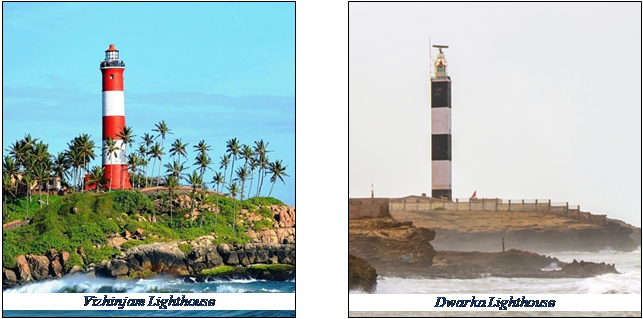
Lighthouse tourism has risen from about 4 lakh visitors in 2014 to 18.63 lakh in 2024–25. Across the country, 75 lighthouses have been developed as tourism destinations to preserve their historical and architectural significance. Some of these include the Mandvi Lighthouse and Dwarka Lighthouse in Gujarat, Tadri Lighthouse in Karnataka, Pamban Lighthouse in Tamil Nadu, and Vizhinjam Lighthouse in Kerala. A digital ticketing portal has also been launched under the Directorate General of Lighthouses and Lightships (DGLL), bringing the visitor experience onto a common digital platform. The growing interest in lighthouse tourism is creating new spaces to showcase India’s maritime legacy. These developments have also generated employment with nearby hotels, restaurants, tour operators, transport services, local shops, and artisans.

|
|

The Light Still Leads
The lighthouse may look much the same from a distance, but the technology behind its familiar beam has changed significantly. What once depended on fire and oil is now powered by the sun and strengthened by modern technology. All lighthouses in the country are solar-powered, making renewable energy part of the infrastructure that keeps these navigational lights working.
The evolution can be traced through individual stations. At Samiyani Island in Gujarat, an oil lamp gave way to a solar-powered electronic flasher, followed by an LED lantern in 2016. At Jodiya, a solar-operated flashing light was introduced before being upgraded to a high-intensity LED lantern in 2021. Lighthouses have become part of India’s wider maritime information network. 87 Automatic Identification System (AIS) shore stations have been installed on lighthouses along the coast. This ensures that the beam remains dependable, responsive and ready to guide vessels safely. AIS is a ship and shore-based data broadcast system in accordance with SOLAS (International Convention for the Safety of Life at Sea). It is a powerful tool for enhancing situational awareness, thereby contributing to the safety of navigation and efficiency of shipping traffic management.
Lighthouse Museums: Bringing Maritime History Closer
While technology is strengthening the lighthouse’s working role, its older stories are finding a place of their own. India has dedicated lighthouse museums at Chennai, Mahabalipuram, Alappuzha, Kannur, Muttom, Dwarka and Gopnath.

|
|
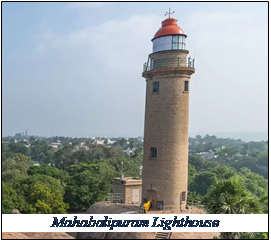
Mahabalipuram, also known as Mamallapuram, offers a particularly rich story, shaped by centuries of maritime activity along the Tamil Nadu coast. The Pallavas developed it as an important port during the seventh century AD for maritime trade with countries across Southeast Asia and the Mediterranean. A log fire once served as a guide for vessels approaching the coast. The first conventional lighthouse was established in 1887 on the roof of Olakkaneeswar Temple by placing a wick lamp inside a 4th-order optic and lantern. The Main light and emergency light source were modified to a cluster of three 150 W, 230 V metal halide lamps in 2004.
The present lighthouse is a 26-metre-high circular tower built with stone masonry. The tower itself has continued to evolve alongside the story it preserves. Its main light was upgraded to a 236-watt LED array in 2020, the first of its kind. The result is a combination of living heritage and working technology. The museum showcases a history of lighthouses through engaging exhibits and rare artifacts. Its National Heritage and Maritime Museum brings the site’s past into the visitor experience.
This museum-led approach is also being carried into larger projects.
At Lothal in Gujarat, the National Maritime Heritage Complex (NMHC) is set to include a 77-metre-high Lighthouse Museum. It is planned as the tallest lighthouse museum and one of the largest maritime museums in the world, with an estimated cost of ₹266.11 crore. NMHC is one of the most significant cultural and maritime initiatives. It seeks to revive and showcase India’s maritime legacy spanning over five millennia. It will also include a 5D Dome Theatre, Coastal States Pavilion, a Museotel, an Eco Resort and a Maritime Research Institute (MRI) being developed with the Indian Maritime University (IMU). The lighthouse museum will captivate visitors with panoramic views of the entire complex. Its design draws inspiration from the Mahabalipuram Lighthouse, one of India’s oldest lighthouses. The museum will retain its distinctive architectural character, with extensive use of stone. Carefully curated virtual reality (VR) walkthroughs will offer visitors glimpses into the history of Indian lighthouses along the vast coastline. A state-of-the-art sound and light show will illuminate the lighthouse using projection mapping technology.
Lothal itself is one of the country’s most important archaeological sites associated with ancient maritime trade. A lighthouse museum like this connects the earliest traditions of seafaring with the evolution of modern aids to navigation. The story is also expanding along India’s eastern coast. A new Lighthouse Museum at Visakhapatnam is planned at the Old Lighthouse area, with 3,156 square metres of land earmarked for the project.
When the Lighthouse Becomes a Celebration
The transformation has also created something that a conventional project rarely produces: a festival around the lighthouse itself. The first edition was held at Fort Aguada in Goa in 2023. The second moved to Puri in Odisha in 2024, while the third edition was held in Visakhapatnam in 2026. The festivals have deliberately placed lighthouses within a wider cultural setting. The first Indian Lighthouse Festival brought maritime heritage to life through cultural exhibitions, sessions on maritime history, classical performances, musical evenings featuring celebrity singers, and coastal cuisine.
|
The Indian Lighthouse Festival in Goa |
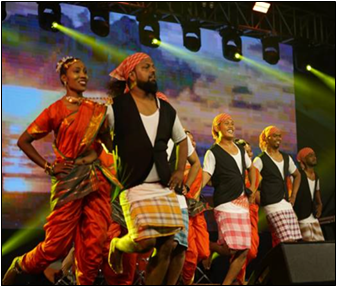
The idea of community participation gained particular emphasis in the second edition of the festival. At Puri, the programme brought together lighthouse heritage with sand art, boat art, yoga, and folk dance & music. The event also highlighted Odisha’s five tourism-developed lighthouses, Gopalpur, Puri, Chandrabhaga, Paradip and False Point. The Government announced plans to involve coastal communities in preserving, protecting and promoting lighthouse sites.
During the Indian Lighthouse Festival 3.0 in Visakhapatnam, the lighthouse had become the centre of an even broader celebration of coastal identity. Local crafts, coastal cuisine and night-time illumination added colour to the programme, while families, youth, artists, entrepreneurs, students and visitors brought the festivities to life. Their enthusiastic participation made the celebration more vibrant, inclusive and closely connected to the communities around the lighthouse.
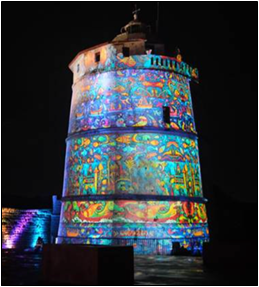
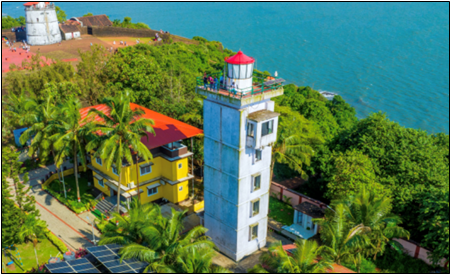
At Aguada in Goa, this new approach has taken a distinctly modern form. A light-and-sound projection mapping show has been introduced at the historic lighthouse, using the structure itself as a canvas to tell a new story around an old landmark.
|
Aguada Lighthouse |
A New Course for the Lighthouse
The idea is no longer confined to India’s coastal towers. It is now reaching new locations, while giving existing lighthouse sites a wider role in public life. An additional 25 lighthouses are proposed for development as tourism destinations, expanding the network beyond the 75 sites already opened to visitors. Four lighthouses are being established along the Brahmaputra at Pandu, Bogibeel, Silghat and Biswanath Ghat. They will be India’s first lighthouse infrastructure on an inland waterway with a combined outlay of about ₹84 crore. Each lighthouse will rise to 20 metres. Solar power and weather-observation sensors will add modern capabilities to the navigational infrastructure.
Yet these lighthouses are being designed for more than navigation. Each site will include a museum, amphitheatre, cafeteria, children’s play area, souvenir shop and landscaped public spaces. The idea is simple but significant: a lighthouse no longer needs to be only something that marks a vessel’s course from afar. It can also become a place that brings people closer to the water, its history and its changing possibilities. From coastal towers that have stood for generations to new lights rising along the Brahmaputra, India’s lighthouse story is moving into uncharted waters. The light continues to serve its purpose, while the lighthouse becomes a destination in its own right.
References
Ministry of Ports, Shipping and Waterways
https://dgll.nic.in/DGLL-light-house-location/about-chennai/mahabalipuram-lighthouse
https://dgll.nic.in/about-DGLL/Service-reminders/nais
https://www.dgll.nic.in/DGLL-light-house-location/about-vts-gandhi-dham/jodiya-lighthouse
https://www.pib.gov.in/PressReleasePage.aspx?PRID=2066548®=48&lang=2
https://www.pib.gov.in/PressReleasePage.aspx?PRID=2297603®=48&lang=2
https://www.pib.gov.in/PressReleasePage.aspx?PRID=2213361&lang=1®=3
https://x.com/shipmin_india/status/2009198735956566313
https://www.pib.gov.in/PressReleasePage.aspx?PRID=2063453&lang=2
https://www.pib.gov.in/PressReleasePage.aspx?PRID=2200943&lang=1
https://www.pib.gov.in/PressReleasePage.aspx?PRID=2235574®=3&lang=1
Ministry of Culture
https://culture.gov.in/photo-gallery/mamallapuram-lighthouse
PIB Research
(रिलीज़ आईडी: 2321704) आगंतुक पटल : 151