



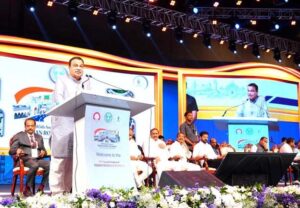
- The Indian Roads Congress (IRC) has been instrumental in India’s road infrastructure development and provides an important platform for discussing innovation, modern technologies and sustainability. 85th Annual Session of Indian Roads Congress (IRC) inauguration was graced by Shri A. Revanth Reddy, Chief Minister, Government of Telangana & Shri Komatireddy Venkat Reddy, Minister for Roads and Buildings, Cinematography, Government of Telangana with Shri Nitin Jairam Gadkari, Minister for Road Transport & Highways, Government of India as the Chief Guest.
- The 85th IRC event served as an important platform for exchanging technical knowledge, discussing emerging developments in road engineering and exploring innovative approaches to strengthening India’s transportation infrastructure. The 85th IRC will host 19 technical sessions. Each session is expected to facilitate exchange of research, experiences and best practices, while encouraging discussions on technological advancements, construction methodologies, quality standards, road safety and sustainable infrastructure. The gathering will provide an opportunity for stakeholders from different parts of the country to share perspectives and explore solutions to the evolving challenges of the road sector.
- At the 85th Annual Session of the Indian Roads Congress in Hyderabad, Union Minister emphasises innovation, use of alternative materials, scientific planning and accountability in road infrastructure development.
Hyderabad, India, November 19, 2026: 85th Annual Session of Indian Roads Congress (IRC) inauguration was graced by Shri A. Revanth Reddy, Chief Minister, Government of Telangana & Shri Komatireddy Venkat Reddy, Minister for Roads and Buildings, Cinematography, Government of Telangana with Shri Nitin Jairam Gadkari, Minister for Road Transport & Highways, Government of India as the Chief Guest. The platform welcomed Dr. K. Ilambarithi, IAS, Secretary to Government, Transport, R&B Department, Shri Rahul Gupta, Secretary General, IRC, New Delhi along with other dignitaries, policymakers, senior government officials, road infrastructure experts, engineers, researchers and industry representatives from across the country to deliberate on the future of India’s road and highway infrastructure.
Union Minister for Road Transport and Highways Shri Nitin Gadkari today addressed the 85th Annual Session of the Indian Roads Congress (IRC) in Hyderabad, Telangana, and called upon engineers, contractors, consultants and policymakers to work collectively towards improving the quality, safety, durability and sustainability of India’s road infrastructure.
Congratulating the engineers, contractors and officials for their contribution to the development of the country’s National Highway network, Shri Gadkari acknowledged their dedicated efforts and technical expertise. He emphasised that continuous upgradation of knowledge, research, innovation and adoption of global best practices are essential for developing future-ready infrastructure.
Highlighting the role of the Indian Roads Congress in setting technical standards for the road sector, the Minister noted that IRC has developed several technical codes, guidelines, manuals and publications that guide road infrastructure development in the country. He urged the organisation to strengthen international cooperation and facilitate greater exchange of knowledge, technology and successful practices to keep Indian standards aligned with evolving global developments.

Focus on Construction Quality and Road Safety
The Minister stressed that quality, safety and durability must remain the foremost priorities in road construction. He called for greater accountability among contractors, consultants and engineers and stated that any compromise in construction quality must invite appropriate action. He also emphasised transparent, time-bound and result-oriented implementation of highway projects.
Shri Gadkari underlined the need to improve the quality of Detailed Project Reports (DPRs), strengthen technical supervision and ensure effective implementation of road safety audits. He urged engineers to identify and rectify accident-prone locations through proper planning, improved junction design, and provision of flyovers and underpasses wherever required. Emphasising the importance of protecting human lives, he called for a collective commitment towards reducing road accidents and eliminating black spots through better engineering and design.
Innovation and Sustainable Construction Practices
Emphasising the need to reduce construction costs while improving quality, the Minister called for greater use of innovative and alternative construction materials. He highlighted the potential of plastic waste, used tyres, steel slag, municipal solid waste and agricultural residue in road construction, wherever technically suitable.
He also referred to the use of bio-bitumen developed from rice straw and highlighted the potential of research and field applications of alternative materials in promoting sustainable highway construction and reducing dependence on conventional resources.
The Minister encouraged wider adoption of alternative fuels and biofuels in construction equipment, including electric, ethanol, biodiesel, CNG, LNG and hydrogen-based technologies. He highlighted their potential to reduce pollution, lower dependence on imported fossil fuels and create additional opportunities for farmers through the diversification of agricultural produce towards the energy sector.
Shri Gadkari also called for greater use of treated wastewater in construction activities, particularly in view of increasing water stress. He highlighted the importance of recycling municipal waste and reusing available resources in infrastructure development. He further encouraged research into tree transplantation and plantation along highways to strengthen environmental protection.
Road Infrastructure as an Enabler of Economic Growth
The Minister highlighted the role of quality road infrastructure in improving connectivity, reducing travel time and logistics costs, and supporting trade, industry, agriculture and tourism. Referring to the Pradhan Mantri Gram Sadak Yojana, he underlined the importance of connecting rural areas through all-weather road networks to improve access to markets and economic opportunities.
He also stressed the need to explore innovative financing mechanisms, including public-private partnerships and monetisation of existing highway assets, to mobilise resources for infrastructure development.
Shri Gadkari urged the Indian Roads Congress to focus not only on developing technical standards and guidelines but also on their effective implementation across the country. He called for greater collaboration among the Central and State Governments, research institutions, industry stakeholders and engineering professionals to address emerging challenges in the road sector.
The Union Minister expressed confidence that the deliberations at the 85th Annual Session would contribute to the development of safer, more durable, sustainable and technologically advanced road infrastructure in the country.
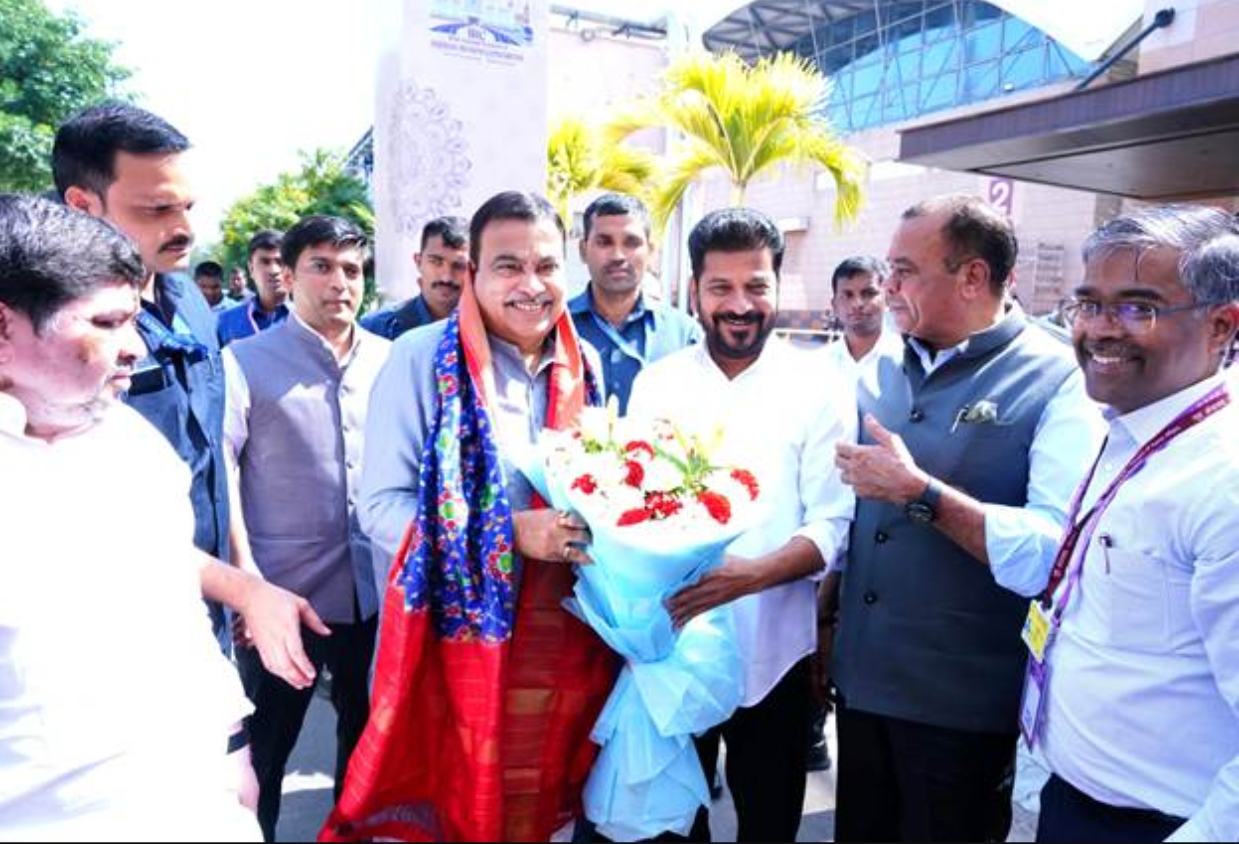
Shri A. Revanth Reddy, Chief Minister, Government of Telangana said, Telangana is progressing with the vision of “Telangana Rising”, aiming to become a 1 trillion-dollar economy by 2034 and a 3 trillion-dollar economy by 2047, as India celebrates 100 years of independence. Roads are fundamental to national development. As I firmly believe, great roads make countries rich and developed. Our development vision divides Telangana into three economic zones: CURE (Core Urban Region Economy), covering approximately 2,100 sq. km between the ORR and RRR, with a population of 1.34 crore, which we aim to develop as a services-sector hub; PURE (Peri-Urban Region Economy), which we envision as India’s largest manufacturing corridor, catering to global requirements under the China Plus One strategy, with the proposed Regional Ring Road as a key enabler; and RARE (Rural Agri Region Economy), extending to the state’s borders, focused on agriculture and allied industries. Each zone has distinct development priorities, with roads playing a central role in connecting them.
He further added, Our Roads & Buildings Department is undertaking extensive development and upgradation of State and National Highways to ensure seamless connectivity, improved mobility and accessibility, and stronger links between cities, villages and industrial clusters, thereby promoting trade, commerce and economic growth. Beyond roads, we are strengthening healthcare infrastructure through the construction of a new Osmania Hospital, replacing the existing 100-year-old facility, along with Telangana Institute of Medical Sciences (TIMS) Hospital, together providing approximately 8,000 beds for the people of Telangana. Telangana Rising is aligned with Viksit Bharat 2047, under which India aims to become a 30 trillion-dollar economy, with Telangana aspiring to contribute 3 trillion dollars. Despite accounting for just 2.5% of India’s population, Telangana contributes 5% of the national GDP and aims to raise this to 10% by 2047.
Komatireddy Venkat Reddy, Minister for Roads and Buildings, Cinematography, Government of Telangana said, Since its establishment in 1934, the IRC has played a significant role in strengthening India’s road infrastructure through technical standards, research and guidelines. I am delighted that this year’s technical sessions will address important emerging areas, particularly the special session on “Right to Walk – Building Safe, Accessible and Environmentally Friendly Pedestrian Infrastructure.” Under the visionary leadership of NitinGadkari, India’s national highway network has witnessed remarkable growth, driven by expressways, economic corridors and modern technologies. Fondly known as the “Highway Man of India,” his contribution to the sector is exceptional.
He further added, through our Hybrid Annuity Model programme, we are developing 441 roads spanning 6,092 km, with an estimated investment of ₹13,060 crore, to strengthen connectivity across districts, mandals and villages. As we expand our road network, we must prioritise modern technologies, sustainable construction, quality, transparency and accountability, with road safety at the forefront. I am confident that this session will generate valuable ideas for India’s road infrastructure.