
























Ministry of Social Justice & Empowerment
A New Chapter of Dignity Through the NAMASTE Scheme
प्रविष्टि तिथि: 10 NOV 2026 6:45PM by PIB Delhi
The journey of 60 year Mr Subramanian (name changed), reflects the importance of ensuring occupational safety, health protection and livelihood security for sanitation workers.
Through the NAMASTE Scheme, access to protective equipment and awareness training has helped him continue his profession with greater confidence, improved well-being and dignity. His experience highlights how targeted interventions under the NAMASTE Scheme are contributing towards safer working conditions, better livelihood opportunities and a more dignified future for sanitation workers.
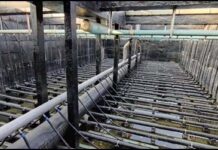
Mr Subramanian, a sanitation worker from Pondicherry Municipality, belonging to the Scheduled Caste community, had spent over 15 years undertaking the demanding work of sewer and septic tank cleaning. Throughout his working life, he was frequently exposed to hazardous conditions, often without adequate protective equipment or occupational safety measures. Prolonged exposure to hazardous waste resulted in recurring skin infections and respiratory discomfort, affecting his ability to work regularly and maintain his health.
As the sole earning member of a family of four, his health-related challenges placed considerable financial pressure on the household. Frequent medical expenses further strained the family’s limited resources, while his modest monthly income of approximately Rs. 12,000 made it difficult to manage household requirements. Despite these hardships, he remained committed to his profession and aspired to continue earning a livelihood with dignity while ensuring his safety and well-being.
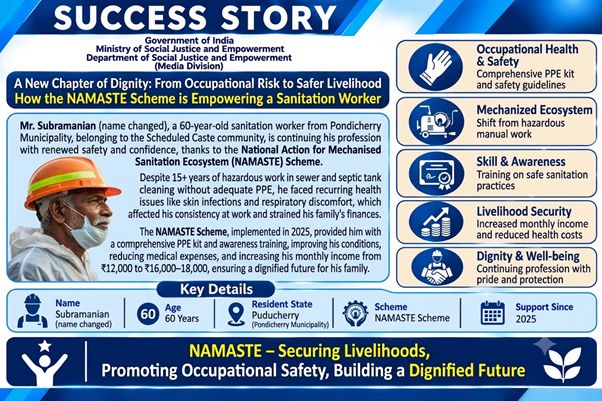
A significant change came in 2025 through the National Action for Mechanised Sanitation Ecosystem (NAMASTE) Scheme, implemented by the Ministry of Social Justice and Empowerment. Under the scheme, he received a comprehensive Personal Protective Equipment (PPE) kit comprising protective overalls, heavy-duty gloves, gumboots, a face mask and a safety helmet. He also underwent awareness training on safe sanitation practices and the prevention of occupational health risks.
The provision of protective equipment and safety awareness brought a meaningful improvement to his working conditions. With better protection against occupational hazards, his health improved considerably, work-related absences reduced and medical expenses declined. Improved health and greater consistency at work also contributed to an increase in his monthly income from approximately Rs. 12,000 to Rs. 16,000–18,000, strengthening his financial stability.
***
SS-174-TAR/KV/GA/RK
(रिलीज़ आईडी: 2334780) आगंतुक पटल : 114