



Ministry of Communications

Dr. Pemmasani Highlights India’s Rapid 5G Expansion and Vision for 6G Leadership at ET Telecom 5G Summit
Emphasizes Cultural Transformation Towards Outcome-Oriented Governance with Private Sector Efficiency
Posted On: 20 MAR 2026 5:58PM by PIB Delhi
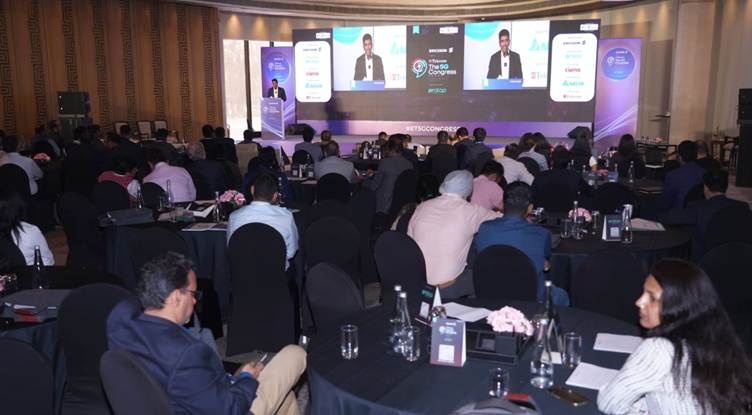
Dr. Pemmasani Chandra Sekhar, Minister of State for Communications, while addressing the ET Telecom 5G Summit in New Delhi, said that India has witnessed remarkable progress in the telecom sector and is advancing with a clear roadmap to emerge as a global leader in 5G and upcoming 6G technologies.
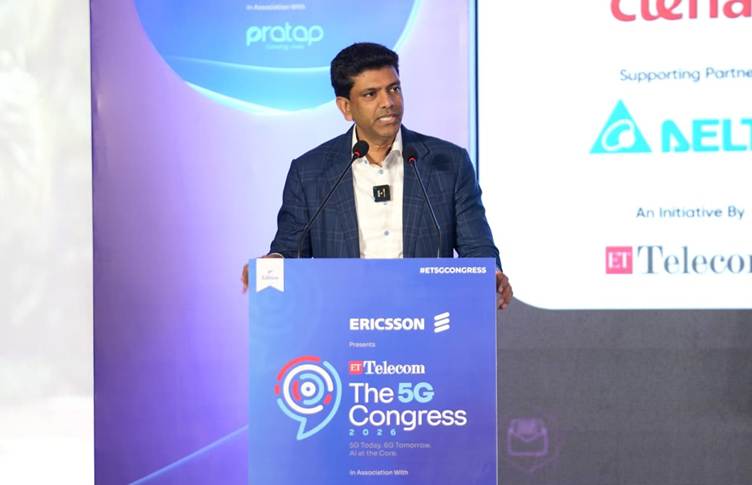
Dr. Pemmasani stated that India is poised to reach 1 billion 5G users by 2031, underlining the transformative impact of next-generation connectivity in enabling unprecedented opportunities for citizens across the country
He emphasized that this rapid progress is the result of decisive policy reforms and strong leadership. Key measures such as redefinition of Adjusted Gross Revenue (AGR), removal of Spectrum Usage Charges (SUC), and rationalization of bank guarantees have significantly improved the financial and operational environment for telecom service providers, enabling large-scale investments in 5G infrastructure.
Highlighting the broader ecosystem push, he noted reforms including Right of Way (RoW) facilitation, spectrum management improvements, telecom infrastructure protection, and simplification of wireless licensing, which have accelerated network expansion and improved service delivery.
Shift Towards Outcome-Oriented Governance and Private Sector Efficiency
Dr. Pemmasani underscored a fundamental cultural transformation within the Department of Telecommunications, with a clear shift towards an outcome-oriented approach and adoption of private sector-like efficiency in governance.
He highlighted that the Ministry is increasingly focusing on speed, accountability, and execution, along with continuous engagement with stakeholders—including telecom service providers, startups, vendors, contractors, and State governments. This ensures that challenges—whether related to infrastructure rollout, permissions, or last-mile connectivity—are addressed in a time-bound and solution-focused manner.
He noted that regular reviews, real-time monitoring, and close coordination with implementing agencies have strengthened ground-level execution, reflecting a governance model that combines policy vision with operational pragmatism.
On rural connectivity, Dr. Pemmasani informed that nearly 35,000 remote villages are being connected through 4G infrastructure, involving extensive coordination across multiple stakeholders. He noted that BSNL has played a crucial role in strengthening rural telecom infrastructure, including upgrading power systems and improving network uptime to 90–95% in several regions.
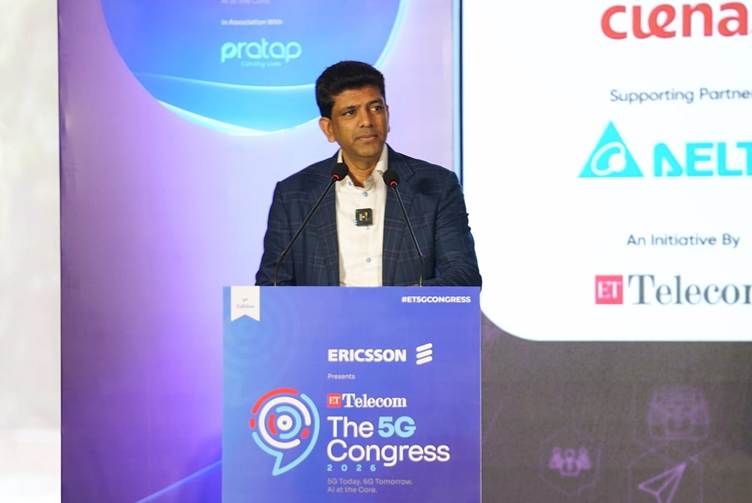
Highlighting progress under BharatNet, he stated that the government is investing approximately USD 17 billion to connect 2.6 lakh Gram Panchayats with high-speed broadband, creating a robust digital backbone for 5G and future 6G services.
Speaking about the future, Dr. Pemmasani outlined India’s aspiration to secure around 10% of global 6G patents and standards, including contributions to global standard-setting bodies such as 3GPP. He emphasized that participation in global standards is critical not only for technological leadership but also for shaping the economic architecture of the telecom ecosystem.
Drawing parallels with countries like South Korea, he noted that early participation in telecom standards enabled companies such as Samsung and LG to emerge as global leaders, and India aims to replicate similar success.
Dr. Pemmasani also highlighted the government’s commitment to fostering innovation by creating a startup-friendly ecosystem, simplifying regulatory processes, and reducing certification timelines for telecom equipment manufacturers.
He further emphasized the focus on improving quality of service, real-time monitoring of network performance, and strengthening telecom security frameworks, including initiatives like Sanchar.
Underscoring the broader transformation, he remarked that India has evolved from being merely a telecom market to becoming a global technology creator, driven by engineers, startups, policymakers, and industry stakeholders working together.
Dr. Pemmasani reaffirmed the government’s commitment to supporting startups, industry players, and researchers, urging them to pursue innovation with ambition and speed to build globally competitive telecom and technology companies.
****
NJ/ARJ
(Release ID: 2243095) Visitor Counter : 91