



Ministry of Health and Family Welfare
Prime Minister Shri Narendra Modi Addresses Post-Budget Webinar on Health Sector Initiatives under the theme “Sabka Saath Sabka Vikas – Fulfilling Aspirations of People”
India Advancing Preventive and Holistic Healthcare; Rapid Expansion of Medical Colleges Strengthens Health Infrastructure: Prime Minister
Yoga and Ayurveda Driving Global Shift Toward Integrated and Holistic Wellness: Prime Minister
Prime Minister Calls for New Training Models to Equip Youth for Emerging Skill-Based Jobs
Prime Minister Urges Greater Telemedicine Awareness and Simpler Digital Health Platforms for Citizens
Union Budget 2026–27 Reinforces Government’s Commitment to Stronger Healthcare Systems: Shri Nadda
Government Targets One Lakh Skilled Allied Healthcare Professionals to Boost Diagnostics and Public Health: Shri Nadda
Better Infrastructure, Emergency Response Systems and Skilled Workforce Key to Timely Life-Saving Care: Shri Nadda
Posted On: 09 MAR 2026 6:26PM by PIB Delhi
“India today is working on a vast vision for preventive and holistic health. In recent years, the country’s health infrastructure has been strengthened, with hundreds of new medical colleges opening across districts.” This was stated by Prime Minister Shri Narendra Modi today during his address at the Post-Budget Webinar on the theme “Sabka Saath Sabka Vikas – Fulfilling Aspirations of People”, highlighting the Government’s commitment to strengthening India’s healthcare system as part of the vision of Viksit Bharat @2047.
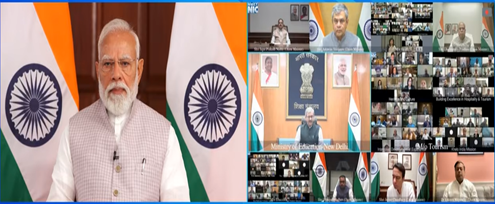
The Prime Minister emphasized that India is steadily focusing more on wellness, early diagnosis and accessible treatment, in the spirit of holistic healthcare. He noted that in recent years the country’s health infrastructure has significantly expanded and healthcare services are reaching villages through initiatives such as Ayushman Bharat and Ayushman Arogya Mandir. These efforts, he said, have strengthened the foundation for ensuring affordable and accessible healthcare for every citizen.
The Prime Minister also highlighted the global recognition being received by India’s traditional systems of healthcare. He noted that Yoga and Ayurveda are gaining popularity across the world and are playing an important role in promoting a more integrated and holistic approach to health and wellness.
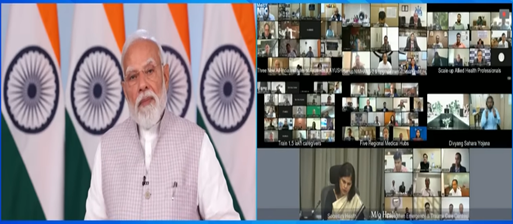
Shri Modi drew attention to the emerging care economy and the growing global demand for trained healthcare professionals and caregivers. He stated, “In the coming decade, the number of senior citizens in the country will rise rapidly. Moreover, even today, many countries across the world face a huge demand for caregivers. Therefore, in the health sector, new skill-based employment opportunities are emerging for millions of youth.” He underlined the need to develop new training models and strengthen the skill ecosystem to prepare India’s youth for these opportunities. The Prime Minister urged experts participating in the webinar to share suggestions for building a stronger training ecosystem that can meet both domestic and global demand for healthcare professionals.
Highlighting the importance of digital transformation in healthcare, the Prime Minister noted the growing role of telemedicine in improving access to healthcare services, especially in remote and underserved regions. While acknowledging the progress made in expanding telemedicine services, he emphasized the need to further enhance awareness and simplify user experience so that more citizens can benefit from digital health platforms.
The Prime Minister stressed that fulfilling the aspirations of citizens remains the core objective of the Union Budget. He expressed confidence that the deliberations during the Post-Budget Webinars would help create a strong roadmap for effective implementation of the health sector initiatives announced in the Budget.
Speaking on the occasion, Union Minister for Health and Family Welfare, Shri Jagat Prakash Nadda stated that the Union Budget 2026–27 reflects the Government’s continued focus on strengthening healthcare systems and expanding access to quality services across the country. He emphasized that modern healthcare requires a comprehensive and team-based approach, where doctors, nurses, allied health professionals, technicians and therapists work together to deliver effective patient care.
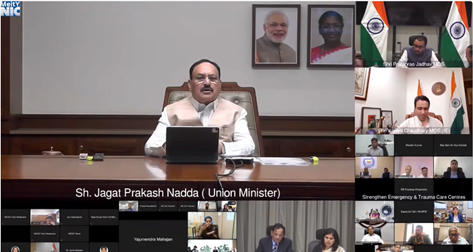
Shri Nadda highlighted the Government’s commitment to strengthening the allied healthcare workforce through the scaling up of allied health education and training. He noted that the National Commission for Allied and Healthcare Professions Act, 2021 and the establishment of the National Commission for Allied and Healthcare Professions have provided a strong regulatory framework for allied and healthcare professions. Building on this foundation, the Government aims to develop a skilled allied healthcare workforce of one lakh professionals in priority disciplines to strengthen diagnostics, rehabilitation and public health services.
The Union Health Minister also highlighted the Government’s focus on strengthening mental healthcare services. He informed that a second campus of the National Institute of Mental Health and Neurosciences (NIMHANS) will be established in North India to expand advanced clinical care, training and research. In addition, the Central Institute of Psychiatry, Ranchi, and the Lokopriya Gopinath Bordoloi Regional Institute of Mental Health, Tezpur, will be upgraded as regional apex institutions to strengthen mental healthcare services in the eastern and north-eastern regions.
Shri Nadda also underlined the importance of strengthening emergency and trauma care services across the country, particularly at the district level. He emphasized that improved infrastructure, integrated emergency response systems and trained human resources will play a crucial role in ensuring timely life-saving care and reducing the financial burden on families.
The Union Health Minister thanked all experts, policymakers and stakeholders for their valuable inputs and called for continued collaboration among States, institutions, industry and academia to ensure effective implementation of the health sector initiatives announced in the Union Budget.
Dr Vinod Paul, Member (Health), NITI Aayog summarized the proceedings of the three parallel breakout sessions on health, namely, “Scaling up Allied Health Professionals”, “Train 1.5 Lakh Caregivers” and establishment of “Five Regional Medical Hubs” in India. Through a presentation, he gave a gist of the key discussion themes from the webinar and the strategic way forward for achieving the three key Budget objectives.
Smt. Punya Salila Srivastava, Union Health Secretary; Dr Vinod Kotwal, Additional Secretary, Union Health Ministry and senior officers of the Union Government were also present on the occasion.
***
SR
HFW/PM Post-Budget Webinar Address/09th March 2026/5
(Release ID: 2237117) Visitor Counter : 126