



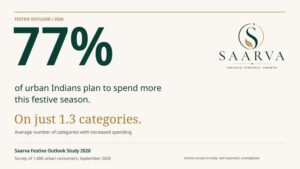
77% plan higher festive spends, yet the average shopper is raising spend in just 1.3 categories
India, 1st October 2026: Urban Indian consumers are entering the festive season ready to spend, but with sharp focus, according to the Festive Outlook Study 2026 by Saarva, a consumer insights and strategy firm. The survey of 1,000+ urban consumers, conducted in September 2026, found that 77% expect to spend more than in a regular month, while only 2% expect to spend less.
That intent is concentrated. On average, shoppers plan to raise spending in just 1.3 categories. The festive basket rests on two near-equal poles: apparel and jewellery (48%) and electronics and home (46%). Travel and dining form a smaller tail at 24%.
Two engines drive the season
Discounts remain the biggest purchase trigger, cited by 49% of consumers, but that is still under half the market. Close behind, 38% say convenience matters more than price. The two groups shop very differently. Discount-led buyers lean towards apparel (60%), move freely between online and offline (42%) and pay digitally (88%). Convenience-led buyers lean towards electronics (52%), favour malls and branded stores (35%), and one in five still pays cash.
New launches sway 23% of shoppers and social media 16.5%. But influence does not always convert: social-led shoppers show the lowest spend intent in the study, at 66%.
No channel owns the season
Shoppers are spread across channels. A mix of online and offline leads at 29%, followed by e-commerce and malls at 25% each, and local retail at 21%. Malls are winning on ease, not price: 53% of mall shoppers are convenience-led and only 26% discount-led.
Mindset predicts spend
The study identifies four shopper mindsets: Price Comparers (52%), Early Planners (36%), Budget Stretchers who overshoot a set budget (15%), and late-buying Impulse Buyers (13%). Early Planners are the most committed, with 86% expecting to spend more. Cash payers sit at the other end, at 59%. Salaried consumers (82%) also show stronger intent than business owners (65%).
Payments are firmly digital at 82%. Only 1% plan to use EMI or BNPL, and just 4% say payment options influence what they buy.
“This festive season, consumers are spending with intent, not abandon. They will spend more, but on fewer things, and how they shop tells us far more than who they are. A planner and an impulse buyer can live in the same household and behave like two different markets. Brands that reach planners early and make buying effortless will do better than those relying on discounts alone,” said Ankur Nagar, Founder & Principal Consultant, Saarva.